APINEX

API Gateway & Management High-Performance API Management Solution
We provide a convenient and cost-effective service for anyone managing APIs. 


With extensive experience in middleware development, Webare Soft aims to lead the IT market with its proprietary technology.
Webare Soft develops system software that serves as the foundation for all B2C and B2B products. 


Core Technologies and Advantages 


Proprietary API Gateway Engine 
Based on extensive middleware expertise, we provide exceptional stability and high performance through our Rust-based proprietary engine. Additionally, we offer easy customization for specialized business environments required by domestic clients and ensure business continuity through rapid maintenance. 


Built-in Monitoring and Fault Minimization 
APINEX provides built-in monitoring without using agent processes or injection, minimizing the engine's overhead for monitoring. 
  • Detects traffic overload and failures at the engine level and enables API server monitoring during operation. 
  • Provides monitoring (statistical) information and generates reports (available for external download). 


Cloud-Oriented and Cost Reduction 
To maximize CPU and memory efficiency, the engine minimizes the need for auto-scaling while supporting multi-threaded processes, reducing costs for cloud-based customers. By improving performance and optimizing resource usage, operational costs can be reduced by more than 50%.


Easy API Version Management and Real-Time Deployment  
API changes are stored and managed at the object (storage) level. APIs can be deployed and applied in real-time without restarting the API Gateway. 


Clean and Simple GUI-Based Configuration and Group-Level Gateway Engine Management 
There is no need to modify complex configuration files to manage the System (Gateway Engine). The Web UI allows for easy management of API Gateway Engines and enables seamless duplication and application of consistent API Gateway settings. 

APINEX Architecture 

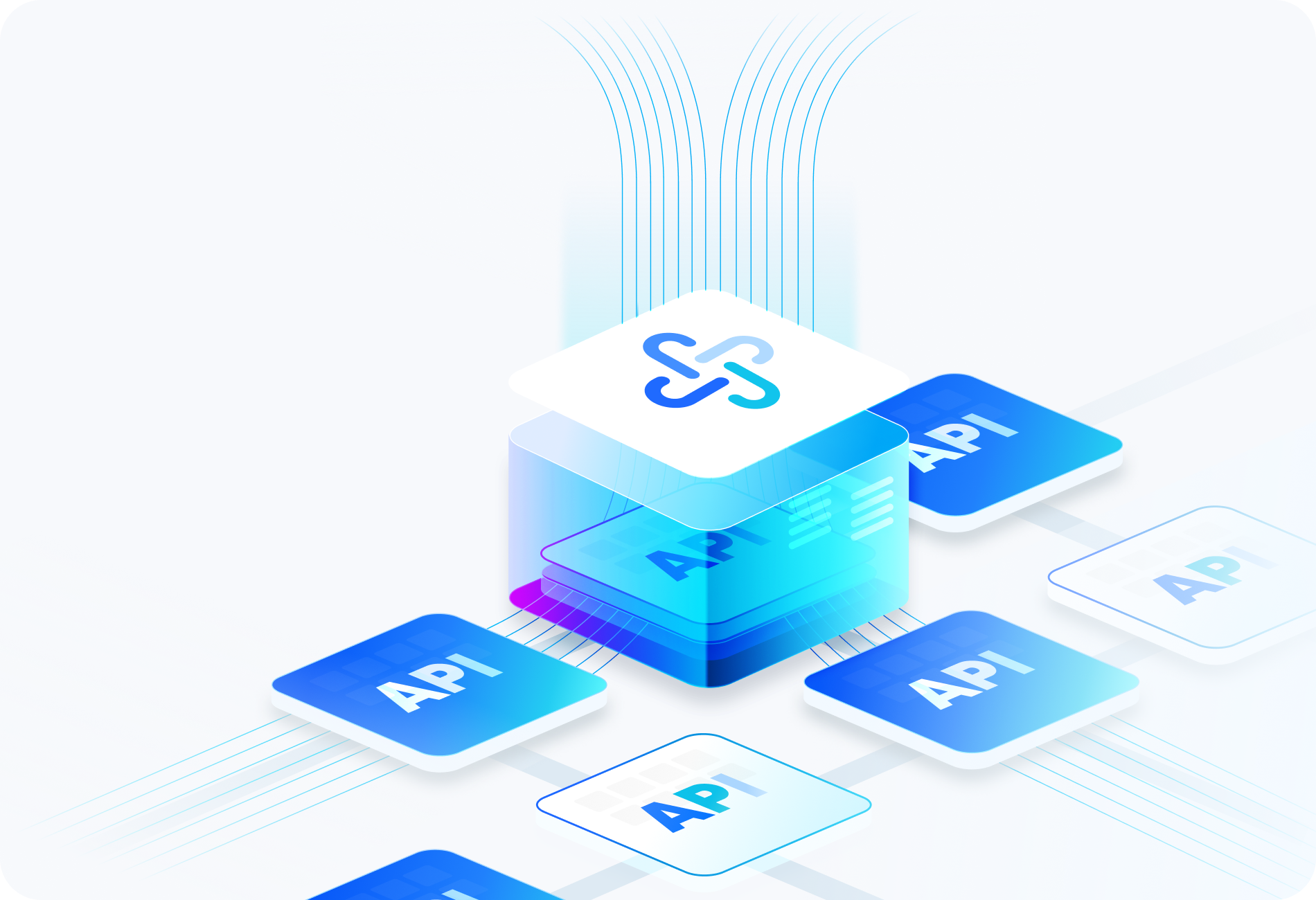
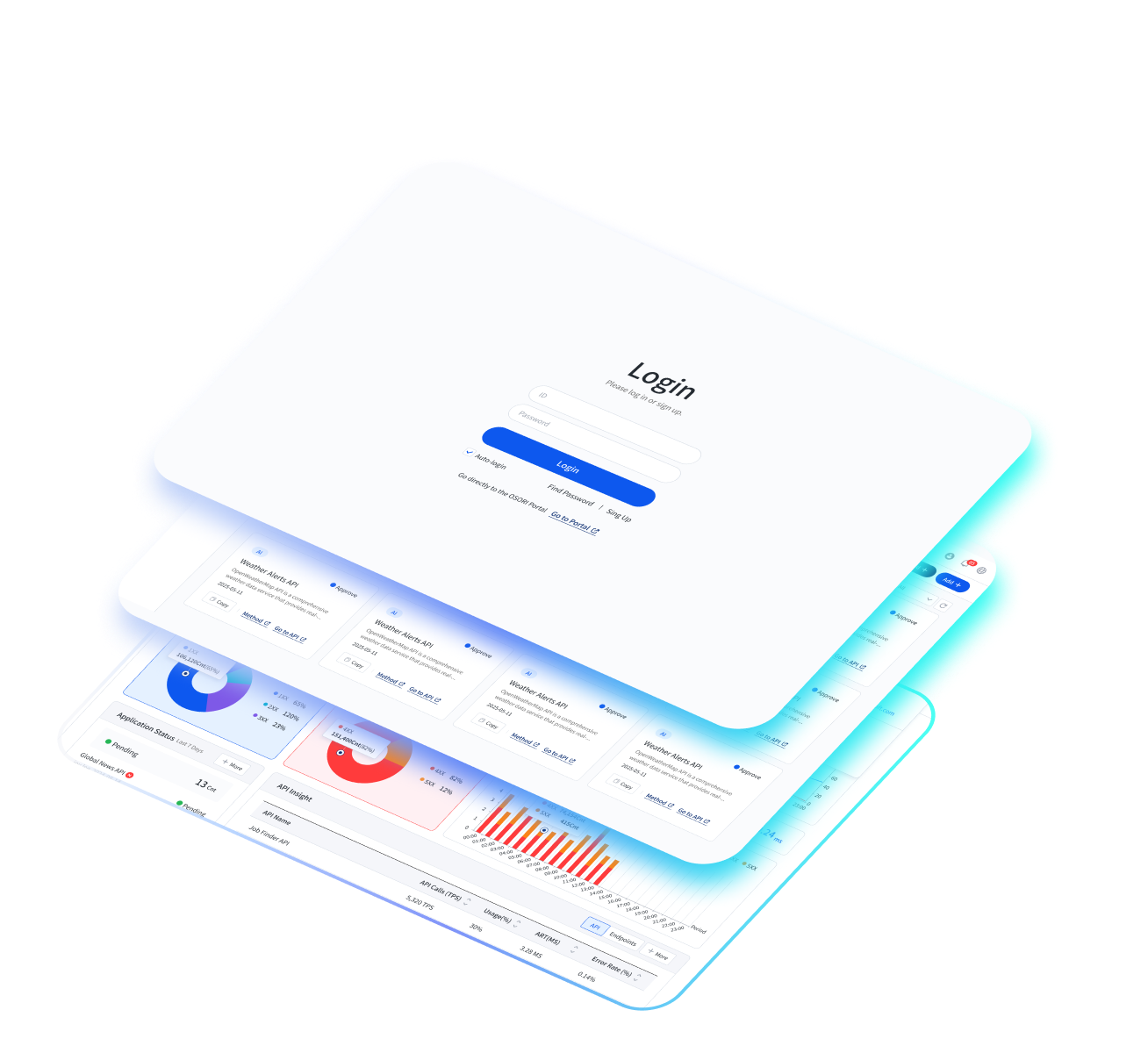
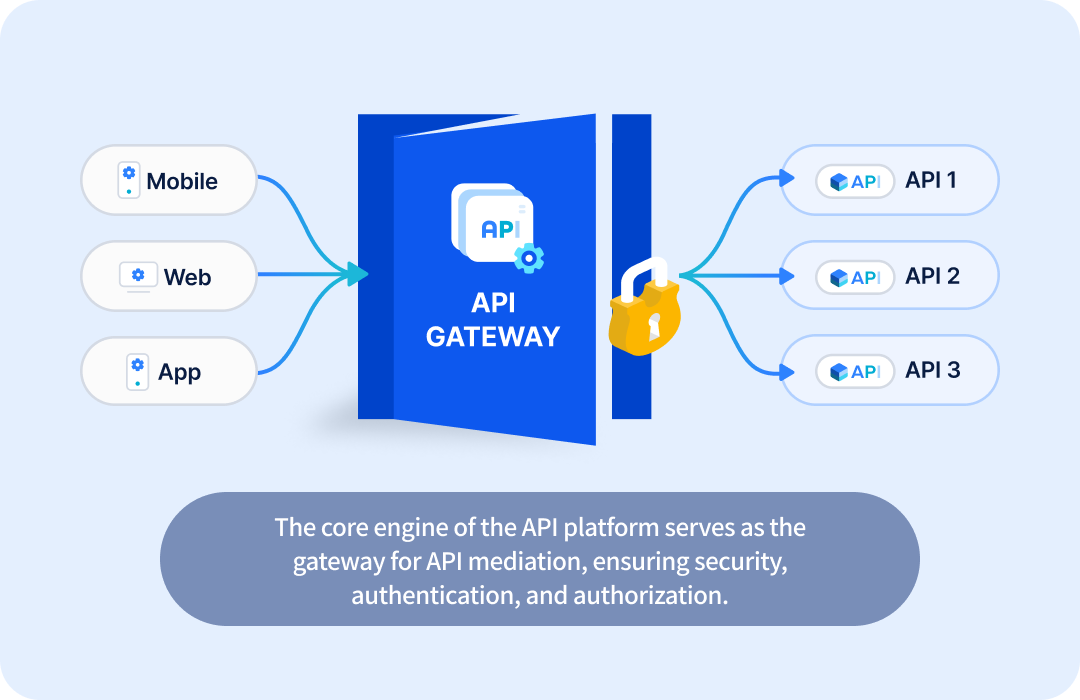
API mediation is handled through the API Gateway, 
while API management is performed via the API Portal and API Manager. 


API Gatewey

It is a proprietary API Gateway Engine, not a foreign product. Developed in Rust, a high-performance and highly efficient language, without Garbage Collection (GC).Uses an event-driven multi-threaded architecture to relay API requests to the API server. 

Security  Authentication & Authorization, In-Transit Encryption 
Traffic Control  Rate Limiting, Circuit Breaker, Request Size Control, Timeout Settings, Fallback Service 
Authentication  API Key Issuance 
Message Transformation  Protocol Binding, Data Format Binding 
High Availability  Auto-Scaling, Load Balancing, API Discovery 

API Manager 

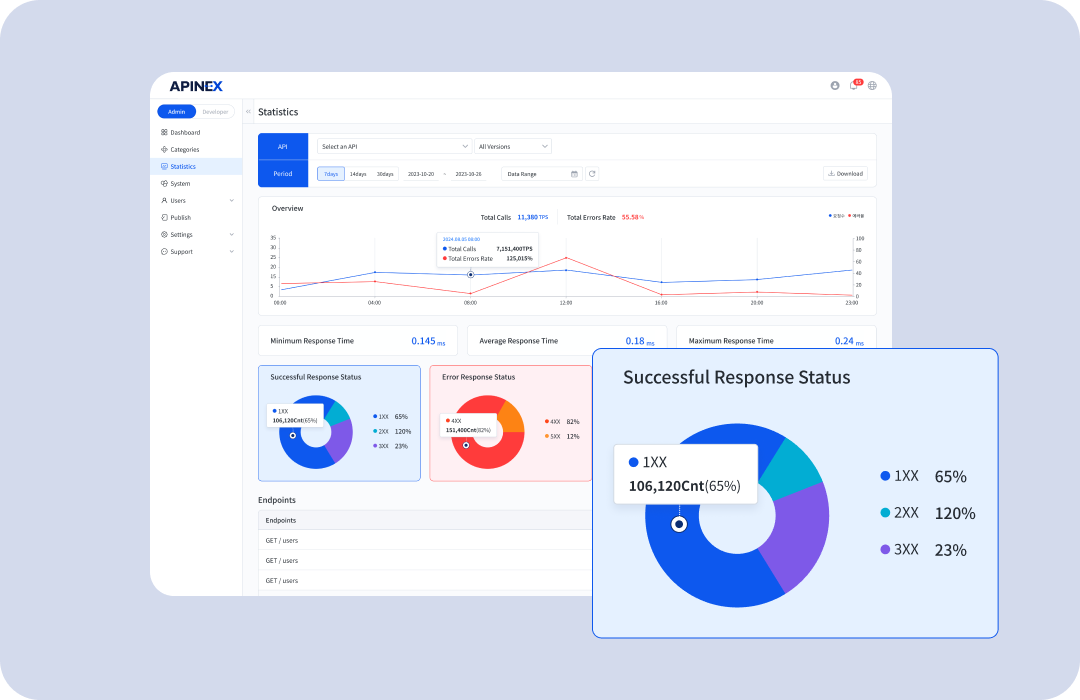
Manage API Life-Cycle with a Web-UI. Easily manage the API Gateway engine for request processing via the UI.Monitor API usage through statistical data. 

Dashboard  Server Status, Request Status, Request Details 
Statistics  View and visualize API and user-specific call statistics 
API Management  API Registration, API Services, API Versioning, API Policies, API Testing 
API Publishing  API Publishing, API Approval, Authentication/Authorization 
System Management  Node Management, Admins, Auto Registration Management, Remote Gateway Restart 

API Portal 

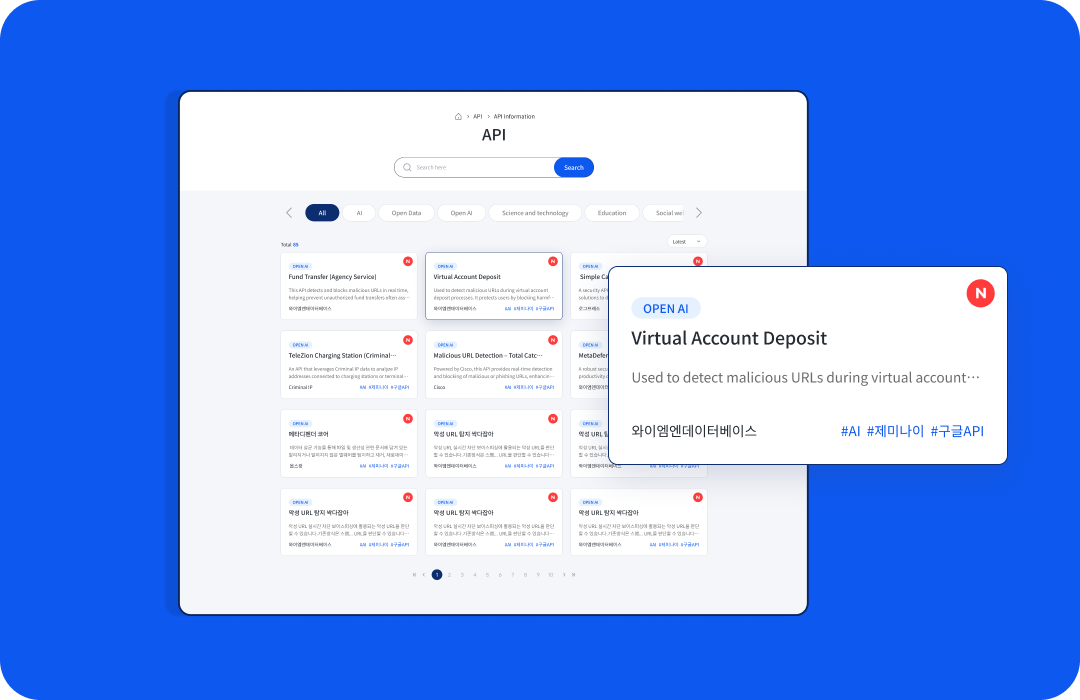
Publish APIs for users who want to subscribe. Users gain approval through subscription to use the API. Monitor owned APIs, usage plans, and statistical data. 

Dashboard  API call status of the logged-in partner 
API Management  API lookup and testing, API Manager integration, API specification inquiry 
API Subscription Request  API subscription request and status for the logged-in partner 
Authentication  API key issuance 
Usage Status Inquiry  API call status of the logged-in partner 

Key Features 

API Management 

Create, publish, and manage 

API versions 


Authentication&Authorization 

Account/permission management 

and mTLS support API Key, OAuth support 

Load balancing 

Load balancing and direct 

transformation, failure alerts, 

and circuit breaking 
OAS Documentation 

OAS-based documentation and 

testing tools, API document export

 and import 

Traffic Control 

Configure API call limits and 

concurrent request limits 


Portal Customization 

Provides a portal for API publishing, customizable to match corporate branding 

Monitoring 

API and user-specific statistics 

monitoring and reporting 


Rate Limit

Set maximum API call limits, with 

billing and metering support 

Message Transformation 

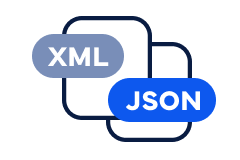
XML ↔ JSON

conversion support 



Engine Management 

Manage the Gateway engine via 

Web UI, system grouping for internal 

and external separation 


Error Tracking 

Automatically generate trace logs on errors, view and download related

 logs via Web UI

 

Automated Alerts & Emails 

Provides email templates and settings management, instant emails for registration and community-related events 
Utilization Plan 

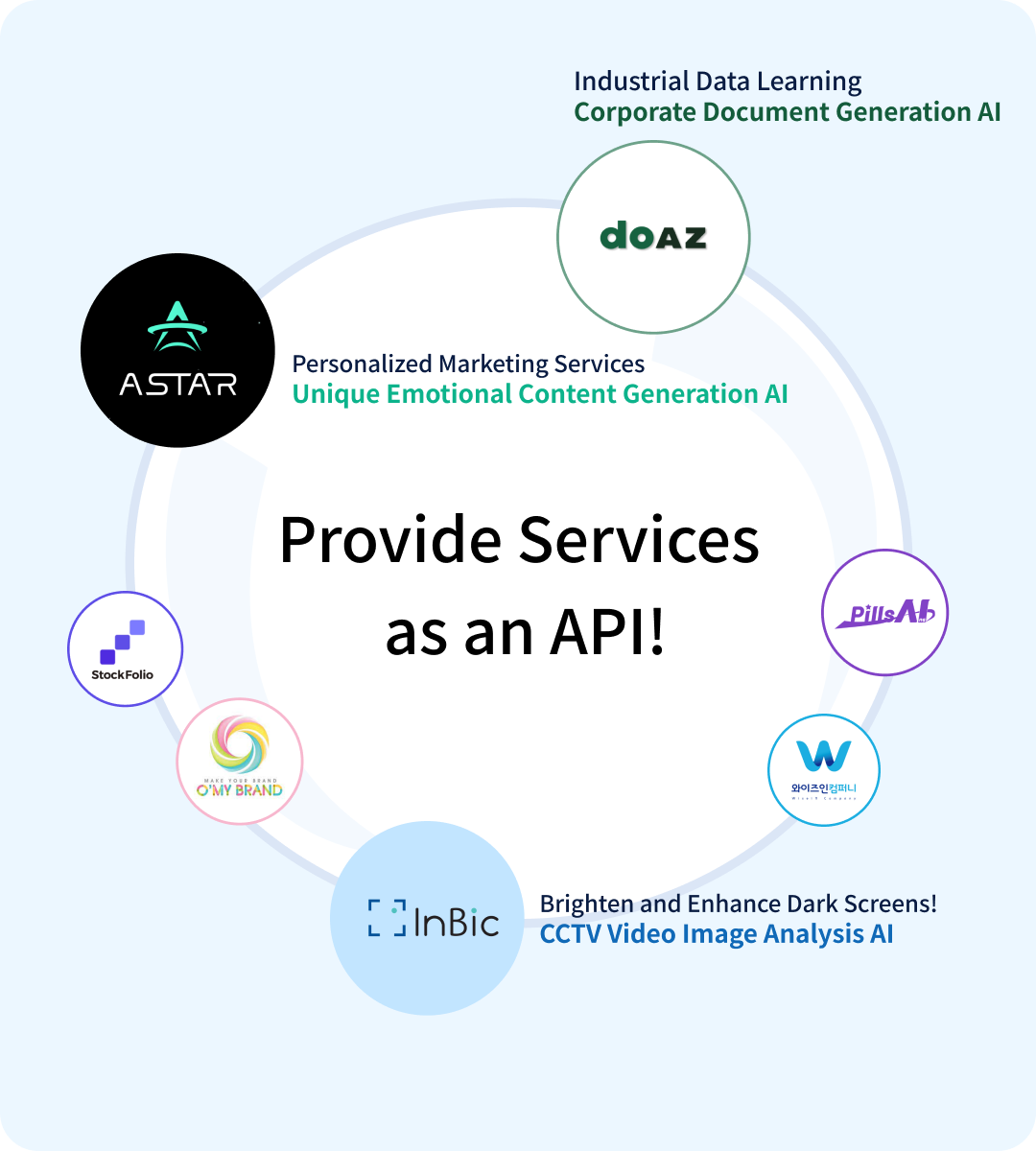
How to Generate Revenue by Registering APIs 

  1. Register APIs in the API Developer Center 
  2. Publish APIs in the API Portal to share AI models with customers and partners
    *APIs are documented in Swagger format based on OAS (Open API Specification) 
  3. Customers and partners subscribe to and use APIs while monitoring usage (statistics) data
    *API usage is mediated through APINEX API Gateway. 

Companies and institutions manage subscribed customers and partners,

track usage (statistics) data, and establish a revenue model. 

Use Cases 

  • AI-based startups that develop their own AI models 
  • Small, medium, and large enterprises and institutions with HTTP-based APIs for public access 
  • Small, medium, and large enterprises and institutions developing HTTP-based APIs for MyData 

Example Use Cases 

  • A startup with an AI model that enhances nighttime photos 
  • The AI model is turned into an API and made publicly available using APINEX 
  • Pricing Policy (Usage Plans): (100 KRW per API call) 
  1. 100 calls/month for 10,000 KRW 
  2. 10,000 calls/month for 900,000 KRW
  3. 20,000 calls/month for 1,600,000 KRW 
  • A startup selling 5 event-based plans (1 from Plan 1, 2 from Plan 2, and 3 from Plan 3) generates a revenue of 5,010,000 KRW